TRADITIONAL FOLK HORO DANCES
According to unofficial estimates, there are more than 500 traditional Bulgarian folk horo dances, many of which are danced only by elderly people in small, remote villages across the country. To keep them from disappearing, between 2020 and 2025 the Taratanci team began travelling around Bulgaria, working with choreographers, ethnologists, folklorists and tradition bearers of Bulgarian folklore. As a result, we have so far collected the footprints of more than 100 Bulgarian folk horo dances, which we are gradually processing and digitising as visual graphic figures.
In the catalogue of Bulgarian folk horo dances below, you will find a list of the dances we have recorded to date. The names highlighted in orange are dances we have already processed. Clicking on one will take you to our YouTube channel, where you can see how the horo is danced, where it comes from, who showed it to us and how we collected the footprint of its steps.
In recognition of this contribution to safeguarding Bulgaria’s intangible cultural heritage, Taratanci received the European Heritage Award / Europa Nostra Award in 2021.
Origin of the word “horo”
The word horo comes from the Latin chorus, a gathering of dancers and musicians, and also from the Greek choros, a round dance, which was performed in Ancient Greece in honour of Terpsichore, the muse of choral dance and song, “she who delights in the dance”. The muse’s name comes from two words: terpo (to delight, to rejoice) and choros (dance).
The origins of Bulgarian folk horo dances
The origins of Bulgarian folk horo dances lie in our distant past, in every aspect of our people’s life: in their communal labour, their pagan beliefs and customs, and their traditions.
As a Slavic people, our ancestors were engaged mainly in farming, animal husbandry and hunting. And when a tribe reached the seashore or the course of a great river, we also proved to be skilled sailors and fishermen. The level of economic development has always been reflected in our way of life, customs and traditions. Our folk horo dances, and the songs they are danced to, clearly reflect the everyday work of the people: reaping, mowing, hoeing and more.
As the fruit of our people’s collective wisdom and experience, Bulgarian folk horo dances have followed the course of history. They grew richer in theme, rhythm and variety of steps and movements, gradually moving from simpler to more complex and refined forms, variations and combinations.
The type, form, rhythm and combination of steps in Bulgarian folk horo dances inevitably illustrate every side of folk life: various stages of the people’s work, moments of domestic life, certain superstitions, rituals and celebrations.
Style and character of the dances in Bulgaria’s ethnographic regions
Bulgarian folk dances are grouped into folklore regions according to their distinct manner of performance. Each region has its own style and character of dance, but no sharp boundaries can be drawn, as the regions have influenced one another over the years. Style refers to the outward expression of the body’s movements, while character is the sum of the dancers’ inner feelings and state of mind.
[Learn more]
A
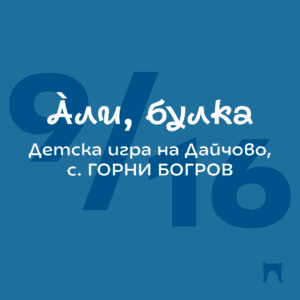
Ali, Bulka
Alonela
Arap Horo
B
Bazaurskata
Batuta
Boaliysko Horo
Breznishko Horo
Brasni Tsarvul
Buenek
Butanel with Batuta
Buchimish
V
Varnensko Horo
Vasilkyo-Bosilkyo
Velingradsko Horo
G
Gabreshevsko Horo
Gankino Horo
Ginka
Graovsko Horo
Gamzovo Horo
Gamzovyana
D
Daychovo Horo
Dvazhdi-Trizhdi
Denyovo Horo
Drebnichkata
Duna Ide
Dunavsko Horo
Dyortayak
Dyado Valkovoto Horo
E
Elenino Horo
Emensko Horo
Enino Horo
Zh
Zhensko Kapansko Horo
Zhikinata
Z
Za Poyas
Zavarti Oro, Galabo
Zelnik
I
Izruchanka
Izhvarlyanata
Y
Yove
K
Kaymya
Kalush
Karakachansko Horo
Karamfilcheto
Krivo Ihtimansko Horo
Krivo Magarentse
Kukunesh
Kutsata
Kyorchovo Horo
L
Leperininata
Lito Selsko Horo
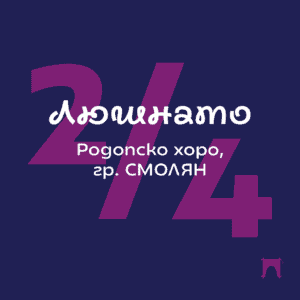
Lyushnato Horo
Lyavo Horo
Lyasa
M
Madzharitsa
Maleshevsko Horo
Matilda
Melnishko Horo
Mitrino Horo
Momchilovsko Horo
Mandra
N
Nadpevat se Malki Momi
O
Opas Horo
Orehovsko Horo
P
Paydushko Horo
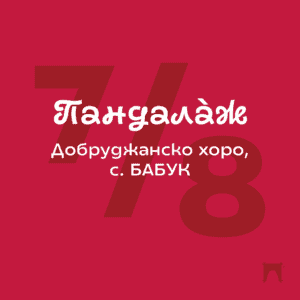
Pandalazh
Petkovo Horo
Petrunino Horo
Pistilche
Povlekana
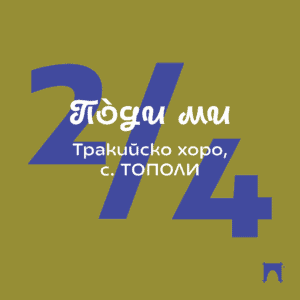
Podi Mi
Pravata with the call “VARNI”
Pravata with the call “SECHI”
Pravo Horo
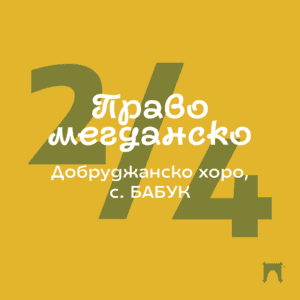
Pravo Dobrudzhansko Horo
Pravo Trakiysko Horo
Premenil se Iliya
R
Razlozhko Horo
Raka
Rachenitsa (Thracian)
Rachenitsa (Northern)
S
Sadzhek
Sborenka
Svatbarskata
Svekarvino Horo
Svornato Horo, Zlatograd
Svornato Horo, Stoykite village
Sey, Sey Bob
Sitnata
Sitno Vlashko Horo
Sitno Gigensko Horo
Sitno Kremikovsko Horo
Slatinsko Horo
Slantseto Varvi da Zayde
Stankinata
Starinsko Horo
Staro Bansko Horo
Sukano Horo
Sarba Ofitseryaska Horo
T
Talashmanliysko Horo
Talim Horo
Tarambeevata
Trite Pati
Tropanka
Tup-Tan
Turlachkata
Tarne Mome
F
Filipovsko Horo
Ts
Tsigansko Horo
Tsintsirash Horo
Ch
Cherkezko Horo
Chetvorkata
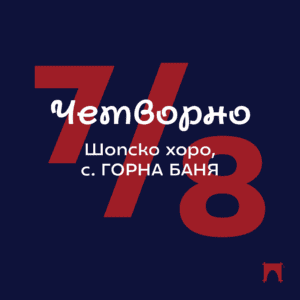
Chetvorno Horo
Chepnitsa
Chichovo Horo
Chukano Horo
Chush Merdzhan
Sh
Shala Una
Shareno Oro
Shira
Shirto
Sht
Shterkolyovata
ALL BULGARIAN FOLK HORO DANCES
ABOUT THE PROJECT
The Digital Catalogue of Bulgarian Folk Horo Dances is a citizen science project. The steps you see here were left by real people – dancers, community cultural centre (chitalishte) ensembles and tradition bearers from all corners of Bulgaria. They danced with paint on their feet across white canvas, and we at Taratanci turned their footprints into a graphic language of the horo. Here is how you can use the information in the catalogue:
The descriptions and data for each horo (location, time signature, musical accompaniment, stylistic features) may be freely used for learning, teaching and research, provided Taratanci is credited as the source.
The graphic diagrams, videos and animations are protected by the copyright of Taratanci Ltd. You may view them and use them for educational purposes, but you may not sell them, print them on products or modify them without our permission.
The final circular images and the Taratanci name are protected as original design and a registered trademark. Every item in the catalogue carries its own Creative Commons licence, so you always know what is permitted.
The project “Digital Catalogue of Bulgarian Folk Horo Dances, Preserved Using the Taratanci Method” is carried out with the support of the Small Pilot Project Funding Competition (Seed Funding), Activity 3.9 of the project “Open and Responsible Science – Bulgaria 2026”.