Folklore regions
Choose a region on the map
Shopluk
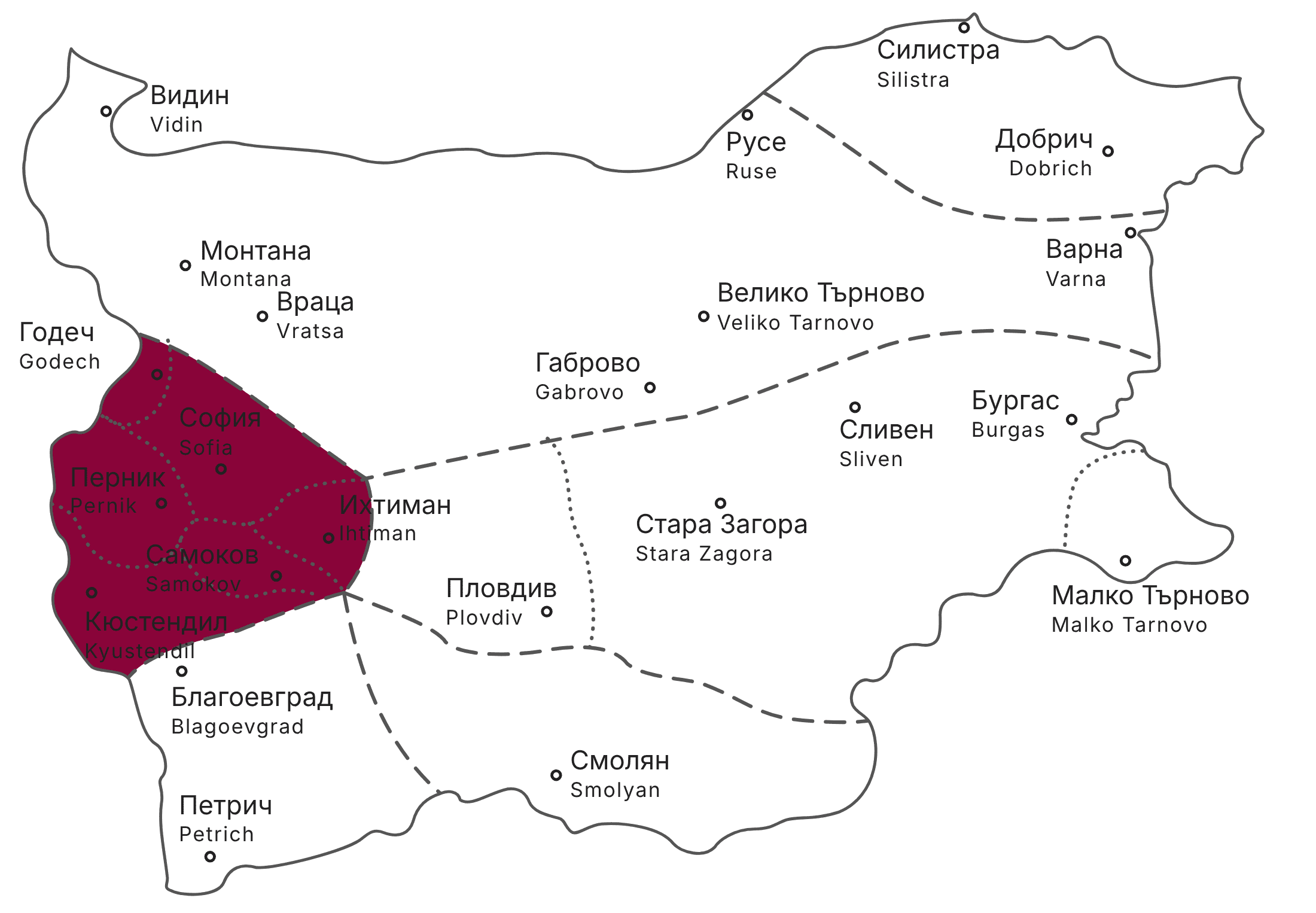
The Shopluk folklore region has several areas – Sofia, Graovo, Kyustendil, Samokov, Ihtiman and Godech – which differ somewhat from one another despite their shared style.
Dancing stirs powerful emotions in the passionate soul of the Shopi, expressed through mighty shouts, growls and whistles. A well-known movement is the “natrisane” – a vigorous shaking of the shoulders, caused by the dynamic, firm and sharp leg movements, as well as by the posture of the body and the belt hold. Lifting the legs high is a display of strength and masculinity. A pronounced striving to break away from the ground is characteristic.
Thracia
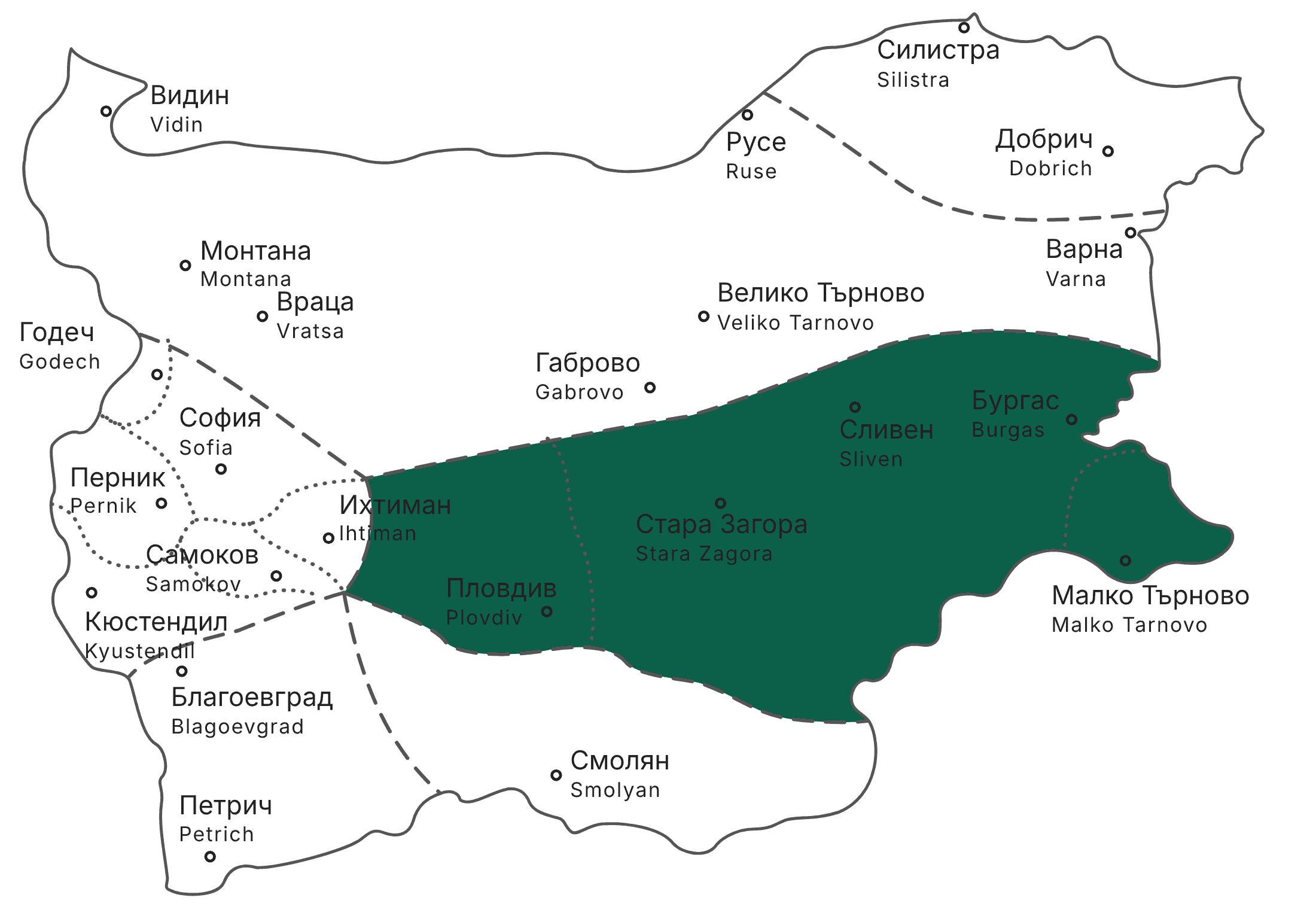
The Thracian folklore region is usually divided into three areas – Western Thracian, Eastern Thracian and Strandzha.
Many of the Strandzha dances are connected with a ritual. The most typical are the nestinari fire dances, the Easter rachenitsas and the kukeri games. The people of Strandzha dance with great concentration and seriousness. The men command respect with complex clapping, and their arms radiate strength and dignity.
The emphasis in Thracian dances is on downward movement – an embodiment of reverence for the earth. Some dances clearly borrow from everyday work, such as kneading bread and rolling out dough. The Thracian merges feast day and workday in his dance, showing that every day is a celebration of its own.
Rhodope
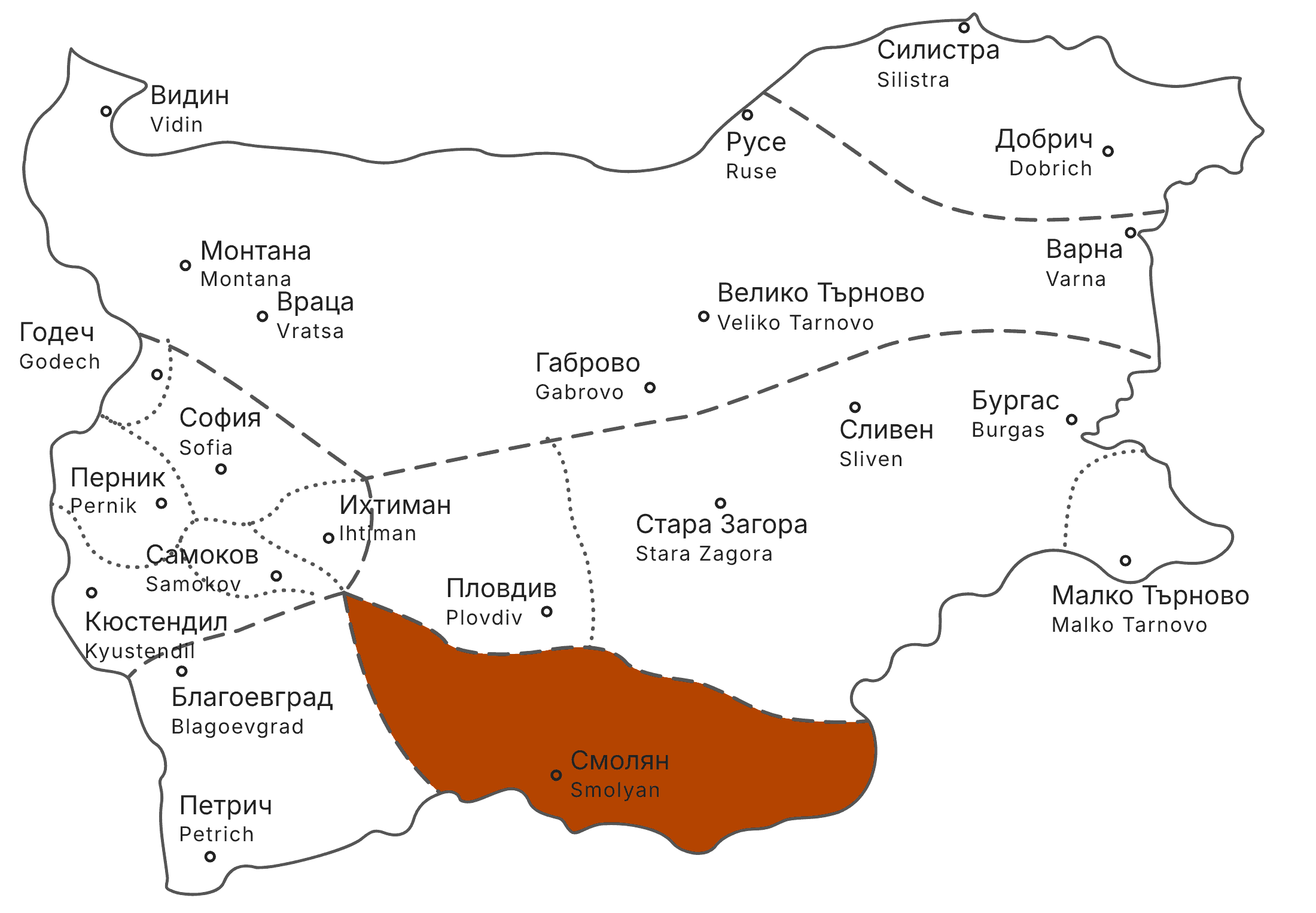
The Rhodope folklore region is characterized by slow and moderate dances, with little variety of movement and relative simplicity. They are most often danced to song, and a distinctive feature here is that the men sing too.
The horos are danced in a semicircle or circle and are most often for men only or women only. Separated mixed horos also occur, but in them men and women do not alternate side by side; instead, the men join the line first, followed by the women.
Men most often hold each other by the palms, which is very characteristic of the Rhodopes; in other regions this hold is very rare. The men dance with wide steps, squatting and kneeling slowly and heavily.
Women hold by the palms or link arms. A characteristic of women’s dances is that the steps are made entirely on the whole foot. The movements include small hops, but they are very low and restrained. The women always stay in a tight chain, in a circle, close to one another, without spreading out during the dance.
Pirin
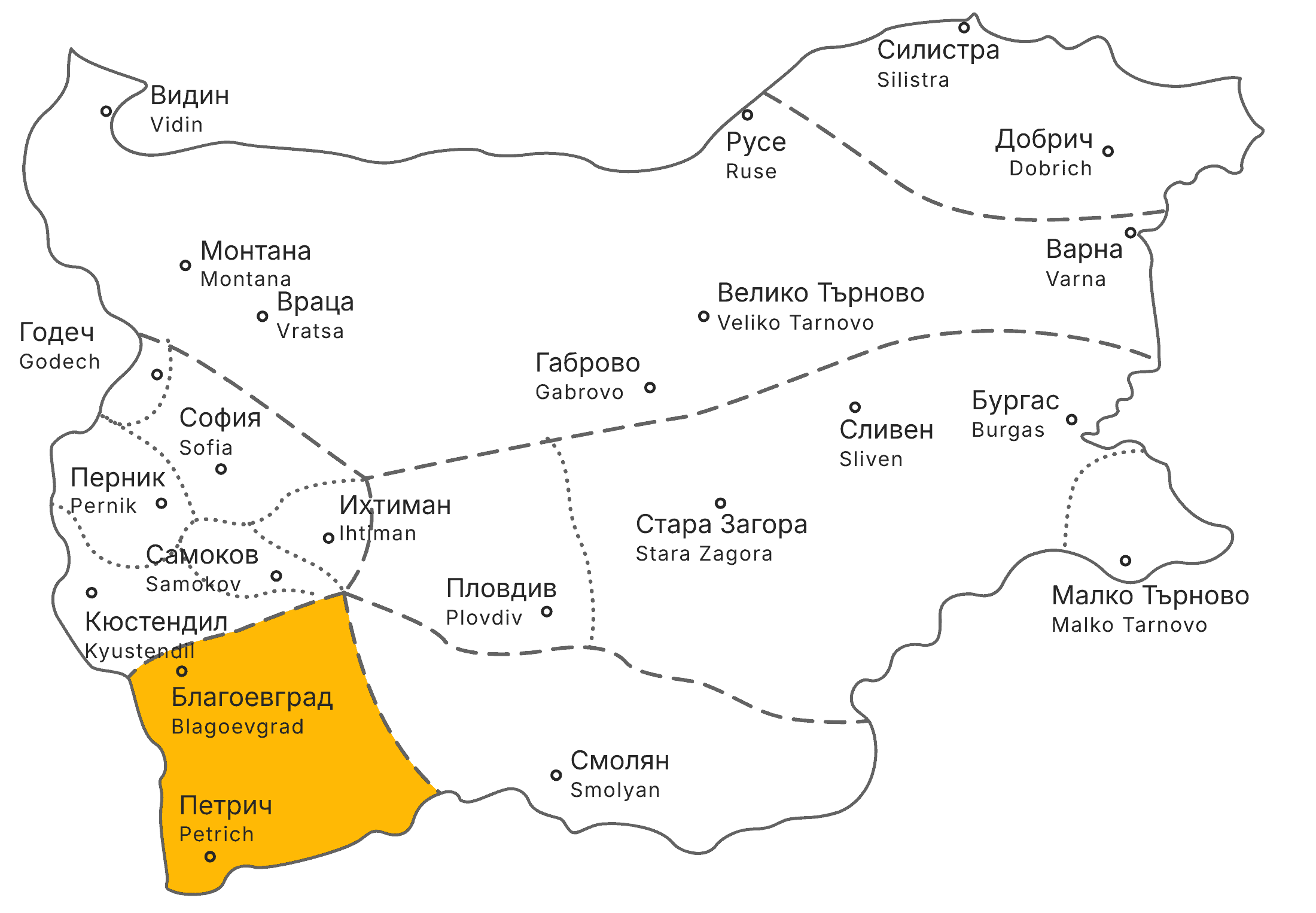
Many dances of the Pirin folklore region are influenced by the Shopluk, Thracian and Rhodope regions, and even Greek influence can be seen. Few dances have preserved a purely Pirin style. The purest, free of outside influence, are those from the Petrich and Sandanski areas.
The light, close-fitting costume allows for higher dancing, expressed in slow, supple leaps and hops and high knee lifts combined with springy bounces. The horos here are moderately fast, the movements light and fluid, combined with sudden freezes in a pose that can last for several bars. The slow dances are very solemn, and the men put a great deal of energy and feeling into them.
Dobrudzha
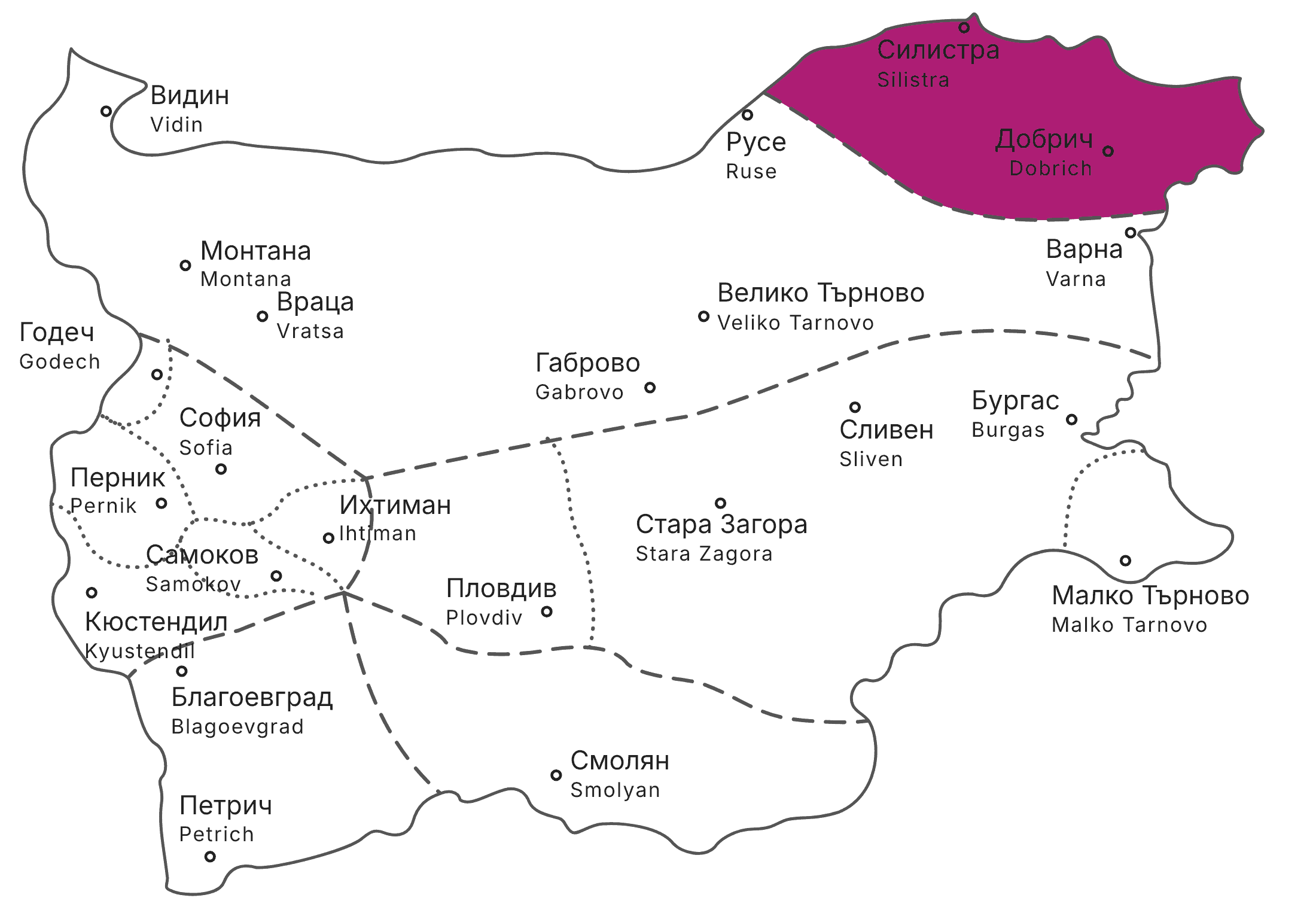
The Dobrudzha folklore region is also close in dance character to the Thracian region, due to the large number of Thracian settlers in Dobrudzha.
The dancing is done in a crouch or half-squat, “glued” to the ground, with the body often leaning backward or forward. The movements are concentrated mainly in the legs, but the arms also play a large part, with a special fluidity among the women. Typical of the Dobrudzha style is the movement of the body and shoulders – full of grace and restraint in the women, and of pronounced inner strength in the men.
The dances embody the strong bond with the land as the main source of livelihood.
Northern Bulgaria – Sever
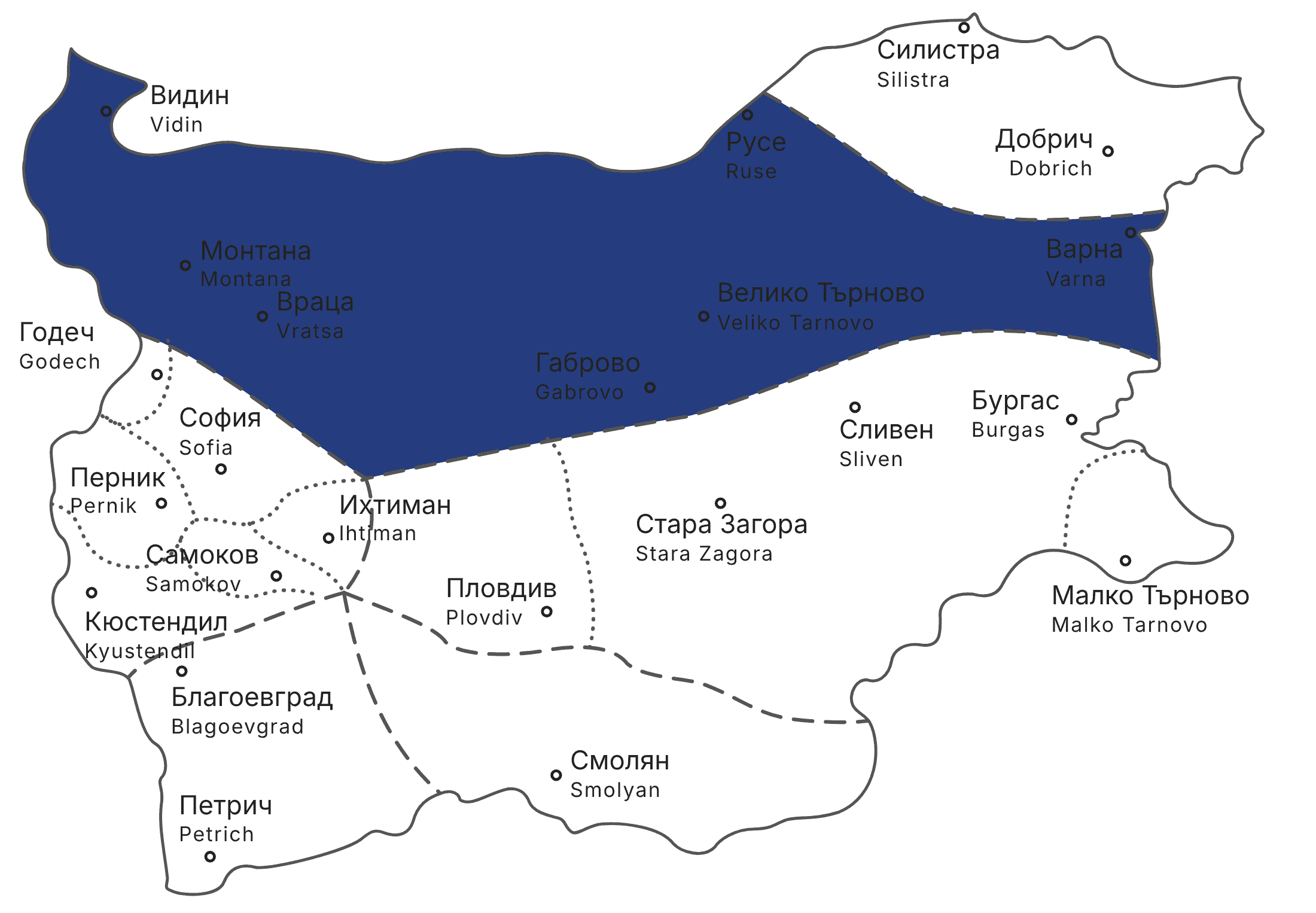
The Northern Bulgarian folklore region is the largest in area. It stands out with its leaping style, born of merriment and the joy of life. Northerners don’t walk calmly – they run and jump, expressing their feelings and joyful emotions. The arms often swing freely and widely in coordination with the leg movements.
People here say they “fly” when they dance. This “flying” comes from the light, whirling dancing in tune with the dancer’s state of mind – for them, dancing means lifting off the ground, breaking free from everyday worries and passing into the much-loved state of merriment.
References

• Vaglarov, S. Bulgarian Folk Horos and Dances (in Bulgarian). Meditsina i Fizkultura Publishing House. Sofia. 1976.

• Petrov, K. Bulgarian Folk Dances from Northeastern Bulgaria: Dobrudzha (in Bulgarian). Slavena Publishing House. Sofia. 1993.

• Petrov, K. Bulgarian Folk Dances from Northwestern and Central Northern Bulgaria (in Bulgarian). Slavena Publishing House. Sofia. 1986.

• Petrov, K. Bulgarian Folk Dances from Thrace (in Bulgarian). Slavena Publishing House. Varna. 2009